⚡ New Pricing Is Live
- Credits Never Expire -
Unknowns Not Charged




Trusted by 4,740+ Companies Worldwide


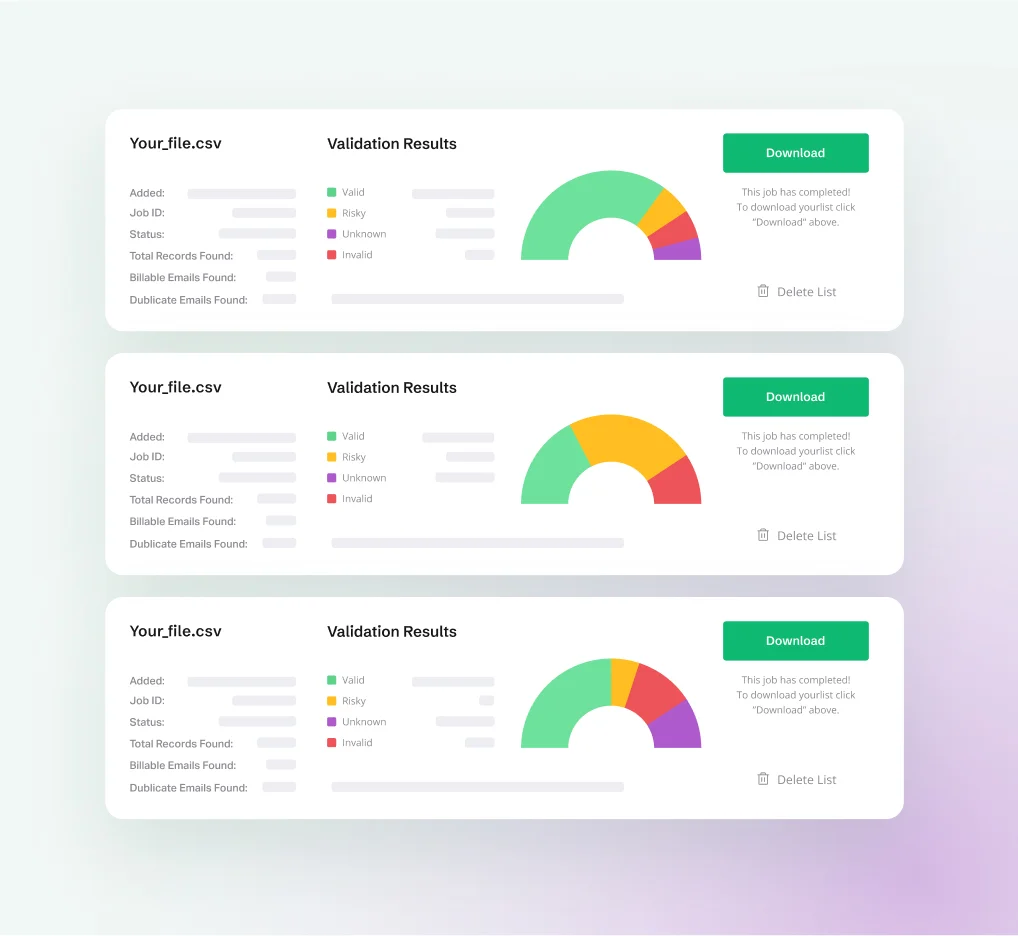
Use real-time verification when an application needs a result during signup, checkout, lead capture, or another user-facing flow. Use batch processing when a backend service needs to validate multiple records outside the request path.
The API can also be called from CRM syncs, enrichment pipelines, scheduled jobs, and internal data-quality workflows. Your application decides when verification runs and how each result category is handled.
Proofy returns structured verification results that can be mapped into your own business logic. Implementation details, request formats, authentication, and current examples are available in the Proofy API documentation.
An email verification API lets an application validate addresses programmatically through REST requests. Proofy returns structured JSON with primary statuses such as Valid, Invalid, Risky, and Unknown, plus additional verification signals. Response time depends on the request type and the behavior of remote mail servers.
An email verification API integrates directly into applications, enabling real-time or batch validation of email addresses. It checks syntax, domains, and mailboxes, ensuring accurate categorization as valid, invalid, risky, or unknown for cleaner, up-to-date email lists.
Proofy does not offer unrestricted free API credits. New users can start with 5,000 verification credits for $5 to test real requests before purchasing a larger package. API documentation is available separately for implementation details.
An email verification API lets teams validate addresses automatically at the point of capture or inside backend workflows. It can reduce invalid submissions, keep CRM data cleaner, standardize verification logic across systems, and remove the need for manual one-by-one checks.
Any business, startup, or organization that handles email lists can benefit from an email validation API. It’s ideal for companies looking to integrate seamless email verification into their systems, ensuring clean and accurate databases for marketing, communication, or user engagement.
Real-time verification validates a single address per call and returns a result immediately, typically used on signup or checkout forms. Batch and large file modes accept multiple addresses in one request or as a file and process them asynchronously, making them suitable for cleaning existing lists or running scheduled database hygiene jobs.