🌿 Spring Specials
​40% OFF
with Code
PROOFYSPRING40
Credits Never Expired
Published:
14.06.2025

Ecommerce Email Marketing — Verified Data Drives Sales

How ecommerce email actually drives revenue — clean lists, welcome flows, lifecycle automation, and the disciplined cadence that protects deliverability.
email campaign setup to reactivate old subscriber list

Email is still the highest-ROI channel in ecommerce — by most credible measures, it returns more revenue per dollar than paid social, paid search, or display advertising. But the ROI numbers cited in older blog posts ($42 per $1 spent, sometimes higher) are aging. The honest current benchmark, from sources like Litmus and the DMA, sits closer to $36 per $1 — still excellent, still the channel worth defending budget for. This guide covers what actually drives that return: data quality, smart sequences, and disciplined sending.

Every recommendation below assumes one thing: a clean list. Even the best abandoned cart flow won't recover revenue from invalid addresses. Validate at signup using the Email Validation API, and clean larger imports through bulk verification. The lift from cleaning a moderately dirty list (say, 8% invalid addresses) usually outperforms any single flow change you can make.

Starting Right: First Principles for Ecommerce Email

Newsletters only work when they provide real value to recipients. That sentence is the cornerstone, even though it gets ignored in practice. Two practical implications:

  • Don't rent or buy email lists. Beyond legal issues (GDPR, CASL, CCPA), purchased lists destroy sender reputation on the first send and create downstream costs that dwarf the perceived savings.
  • Set up a real welcome series before the first marketing send. Welcome emails consistently generate the highest open rates (often 60-80%) and the highest revenue-per-email of any campaign type. Skipping the welcome series is leaving the easiest revenue on the table.

How Welcome Series Actually Work

A welcome series isn't one email; it's a sequence of three to five emails sent over the first two to three weeks after signup. The structure that works:

  • Email 1, sent immediately: Thank you, set expectations for what's coming, deliver any signup incentive (discount code, free guide).
  • Email 2, sent within 48 hours: Introduce the brand and what makes the product worth caring about. Not a sales pitch — a story.
  • Email 3, sent a week in: First product spotlight, ideally personalized by signup source or stated preferences.
  • Email 4, sent at 10-14 days: Social proof — reviews, photos, testimonials.
  • Email 5, sent at 18-21 days: Soft conversion push, often with a small urgency element.

Open rates across the series typically run 40-60%, far higher than steady-state newsletter performance. The series compounds: subscribers who engage with email 1 are more likely to engage with 2, and so on.

For deeper context on the relationship side — beyond one-off sequences — see our guide on re-engagement strategy.

What to Improve Continuously

Ecommerce email requires steady iteration. The mechanics — what to test, what to measure — are stable; the answers change as audiences shift. Practical improvement areas:

Subject Lines

The biggest lever on whether anyone opens. Subject-line testing should be a default habit. Two variants per campaign, picked on open rate or click rate, documented over time. Patterns that work for one audience often don't for another — test, don't assume.

Content Relevance

Audiences are looking for utility, authority, and surprise. Useful content (how-to, comparison, troubleshooting) compounds — subscribers keep opening because the last email was worth their time. Pure promotional content fatigues quickly. The realistic mix is 70/30 value-to-promotion, sometimes higher on the value side.

Design and Layout

Beautiful, structured emails win. Logical hierarchy, clear hero, scannable body, prominent CTA. Don't get fancy — the most reliable ecommerce templates are the ones that look identical to a thousand other ecommerce emails for a reason. They render predictably, they're fast to skim, and they signal "this is a normal store email, not a phishing attempt."

Send Timing

Audiences check email in patterns. The classic windows still hold: morning commute (7-9 AM local), lunch (11 AM-1 PM), early evening commute (5-7 PM), late night planning (10 PM-midnight). Optimal times vary by audience and product category — use per-subscriber send-time optimization if your ESP offers it.

Common Mistakes Ecommerce Brands Make

  • Buying a list. Already covered above, worth repeating. It never works, and it always damages the brand domain.
  • Sending to an unverified list. Same end result, slower onset. Invalid addresses generate bounces; bounces hurt reputation; reputation drop drags down deliverability for everyone on the list. Validate first.
  • Treating the welcome series as optional. If you're not sending welcome emails, you're losing real revenue on every signup. This is the highest-ROI work in ecommerce email.
  • Sending too often, too soon. New subscribers are most likely to unsubscribe in their first 30 days. Three emails a week to a fresh signup feels predatory. Pace the welcome series, then settle into normal cadence.
  • Ignoring mobile rendering. 60%+ of ecommerce email opens happen on mobile. If the email doesn't read well on a 5-inch screen, it doesn't work. Test on real devices.

Automation: Where the Compound Returns Live

Automation is a cool thing that saves you from a huge range of routine work. More importantly, it's where the compound returns of ecommerce email accumulate. Four flows that pay back disproportionately:

  • Welcome series. Covered above. Non-negotiable.
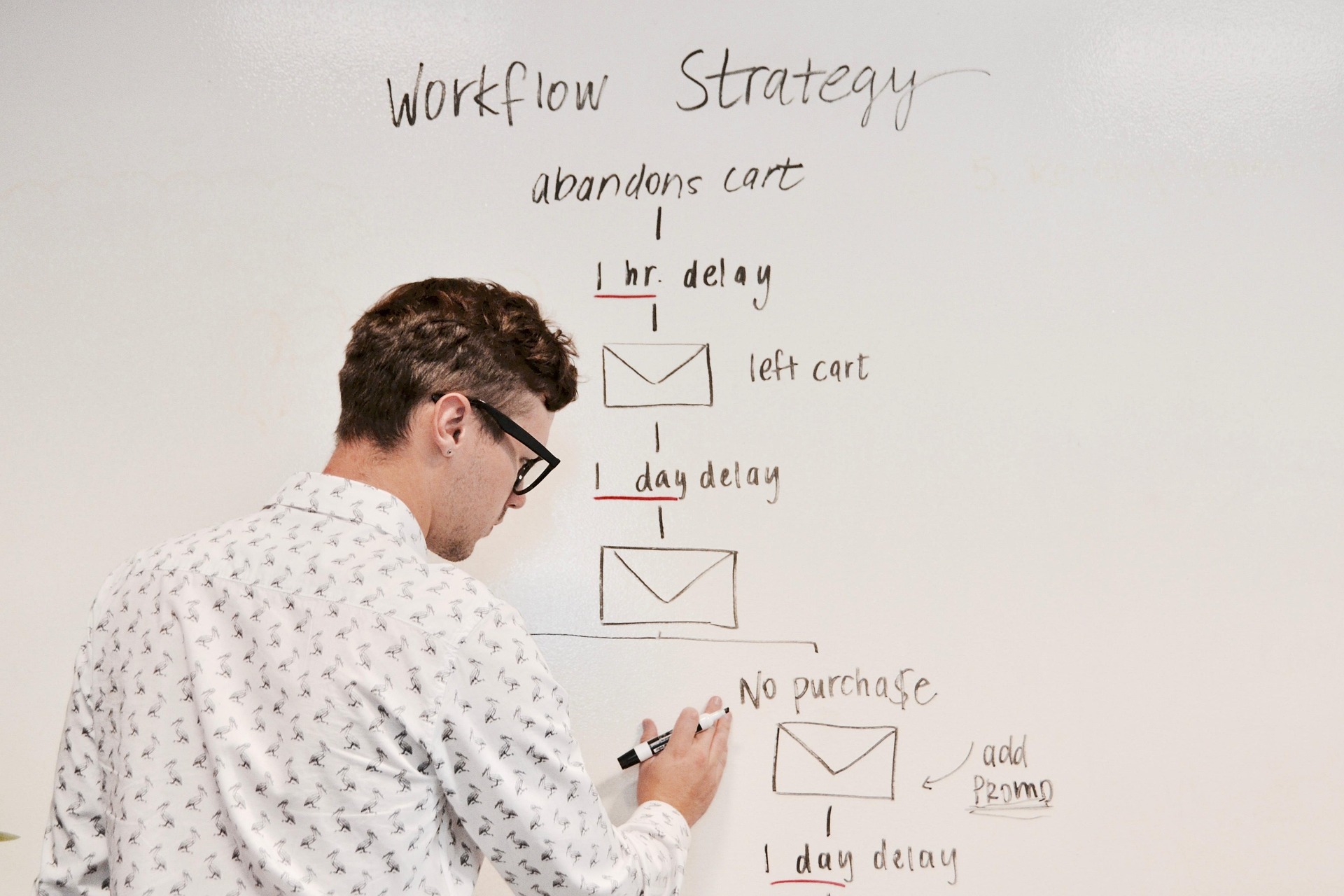
  • Abandoned cart. Recovers a meaningful percentage of carts that would otherwise convert to zero revenue. Industry recovery rates average 10-15%; the better-built flows go higher. Our abandoned cart guide covers the full sequence.
  • Post-purchase. Order confirmation, shipping updates, delivery confirmation, then a follow-up asking for review or suggesting related items. Surprisingly underused by stores that focus only on pre-purchase flows.
  • Win-back. Triggered after 60-90 days of inactivity. Tries to either reactivate or politely move the subscriber off the active list. Both outcomes help.

To keep these flows accurate as data changes, integrate verification at the API level — invalid addresses should never enter your CRM or trigger workflows.

Why Clean Data Quietly Wins

When people say "email prints money," they usually mean great offers and perfect timing. The deeper truth is simpler: money comes from clean data. A list full of typos, abandoned inboxes, or burner addresses caps the ceiling of every other lever you can pull. Clean data silently improves everything — deliverability, opens, clicks, revenue per send.

A 10% off email landing in a dead inbox is just an opportunity cost. The same email landing in a valid, engaged inbox is margin. That tiny difference compounds across welcome series, browse and cart recovery, win-backs, and seasonal promotions. Clean lists don't just lower bounces — they raise the ceiling for every lifecycle flow.

From "Send More" to "Send Smarter"

Most brands try to fix revenue by sending more. That works until it doesn't. Smarter sending starts one step earlier:

  • Validate at capture. Stop bad data at signup and checkout, not after.
  • Re-check before big pushes. Sale weekends? Run a list cleanup before major sends to make sure contacts are valid and active.
  • Protect flows. Keep cart and browse recovery aimed at real people, not ghosts.

A Five-Minute Weekly Ritual

  1. Check last send's bounce and complaint rate.
  2. Re-verify any segment creeping up in bounces.
  3. Validate new signups automatically via API.
  4. Trim "churned inboxes" before major promotions.

Small habit, large lifetime impact.

FAQ

What's the ROI of ecommerce email marketing in 2025?

Credible current benchmarks put it around $36 per $1 spent — still the highest-ROI channel in ecommerce. The figure varies by industry and by how rigorously you measure (true incremental revenue vs. attributed revenue). Either way, the channel earns its budget by a wide margin.

How often should I email my list?

For most ecommerce brands, two to four marketing campaigns per week is a reasonable range, with behavioral triggers running on top. Cadence that's too low forgets you exist; too high fatigues the list. Track unsubscribe rate per campaign — when it climbs, you're over the limit.

What's the difference between newsletter and lifecycle email?

Newsletter email is broadcast: same message to everyone on a schedule. Lifecycle email is triggered by subscriber behavior or stage — welcome, cart abandonment, post-purchase, re-engagement. Lifecycle email typically outperforms newsletters by 3-5x on revenue per recipient because it's relevant by definition.

Should I segment my list?

Yes. Even basic segmentation — engaged vs. inactive, buyers vs. non-buyers, by signup source — dramatically improves performance. More on practical splits in our segmentation guide.

How important is mobile optimization?

Critical. The majority of ecommerce email opens happen on mobile devices. A non-responsive email loses 30-50% of the audience instantly. Test on real iOS and Android devices, not just preview tools.

What's the most common ecommerce email mistake?

Sending to an unverified or dirty list. It looks fine until it doesn't, and by the time the consequences show up in metrics, recovery takes weeks. The cheapest insurance is consistent list hygiene.

Bottom Line

Ecommerce email rewards the boring fundamentals. Clean data, a working welcome series, two or three solid lifecycle flows, disciplined cadence, and steady testing on subject lines and offers. None of this is revolutionary, and that's the point — the brands that do these consistently outperform the ones chasing the next trick. Start with the list, build the welcome flow, then layer the rest. The ROI follows. Keeping an eye on what a healthy unsubscribe rate looks like for ecommerce helps calibrate whether cadence and relevance are working.